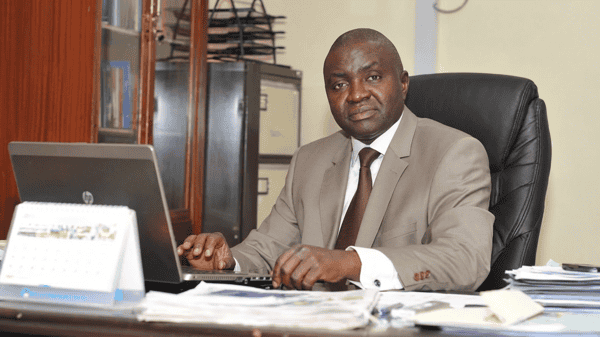

Perturbed by the deep structural, financial, weak governance and operational inefficiencies confronting the Nigeria ‘s power sector coupled with rising debt hovering around N4trillion, despite multiple reform efforts over the years, Chief Executive Officer, Centre for the Promotion of Private Enterprise (CPPE), Dr. Muda Yusuf, suggested some practical solutions to the challenges.
He warned that without decisive action to address structural inefficiencies, improve governance, and ensure fiscal discipline, the current trajectory of subsidy dependence which has plunged the sector into N4trillion debt, would remain unsustainable.
These challenges, he noted have limited service quality, constrained revenue collection, and reduced the ability of operators to invest in network upgrades and loss reduction.
He noted that transmission infrastructure suffered from underinvestment and governance challenges.
These conditions, he said have entrenched a systemic liquidity crisis, undermining sector confidence and sustainability.
As part of the wayout, Dr. Yusuf , whole doubles as former Director General, Lagos Chamber of Commerce and Industry, canvansed for a balanced approach of combining short-term government’s support with medium, to long-term structural reform as essential to building a financially viable, reliable, and inclusive power sector that can support Nigeria’s economic growth and development.
This was contained in CPPE Policy brief on power sector made available to Nigerian Tribune on Sunday, entitled:”Nigeria’s Power Sector Reform: Managing Complexity, Liquidity, and Political Economy Constraints.”
Rather than quick fix approach, Dr. Yusuf suggested the combination of long-term and incremental process, adding that the sector’s complexity, political economy constraints, and institutional weaknesses are pointing to the fact that progress will be gradual.
He canvansed for the adoption of a clear roadmap to cost-reflective tariffs, urging that it should be
Implement in phase and predictable transition toward cost-reflective pricing, with targeted social protection for vulnerable consumers.
He called for an improved
Improved transparency in subsidy management, debt verification, and financial settlements.
In order to address distribution sector weaknesses, Dr. Yusuf called for the need to enforce performance benchmarks for Discos, including recapitalisation, technical upgrades, and loss reduction.
He also canvassed the need to reform transmission management, saying that alternative management or concession models for TCN to improve efficiency and investment.must be exolored.
“Support decentralisation and renewables. Encourage state-level initiatives, independent power projects, and renewable energy adoption to reduce pressure on the national grid.
“Government financial support should be clearly time-bound and linked to measurable reform milestones,” he said.
“Nigeria’s power sector has remained one of the most challenging areas of the country’s economic reform agenda.
“Despite multiple reform efforts over the years, the sector continues to face deep structural, financial, and governance challenges.
These challenges are multi-dimensional, spanning political economy constraints, tariff distortions, weak investor capacity, transmission bottlenecks, and a persistent liquidity crisis across the value chain.
“The inability to implement a fully cost-reflective tariff regime—largely due to social and political sensitivities following recent macroeconomic reforms—has entrenched subsidy dependence and widened the sector’s financing gap.
“As a result, government intervention has become unavoidable in the short term to prevent system collapse and sustain electricity supply,” the document read.
He pointed out that the current financing model that has caused the sector N4trillion debt is not sustainable, calling for an urgent need to ensure that all outstanding claims are properly verified, subjected to rigorous audit, managed transparently and credibly, pointing out that Nigeria’s experience with fuel subsidy regimes has demonstrated the vulnerability of subsidy systems to abuse and malpractice.
“Strong oversight and accountability mechanisms are therefore essential to prevent similar outcomes in the power sector,” he said.
He added that power sector reform has long been recognised as central to Nigeria’s economic competitiveness, industrial growth, and social welfare, noting that progress has been slow and uneven.
Unlike other reform areas, Yusuf said the power sector presented a unique challenge due to the tightly interconnected nature of its value chain—gas supply, generation, transmission, and distribution—where weaknesses in one segment undermine the entire system.
According to him, recent macroeconomic reforms, including foreign exchange unification and fuel subsidy removal, have further complicated the reform environment by heightening cost-of-living pressures and intensifying resistance to tariff adjustments in the power sector.